Cart
product added to request
BI configure
TSR-CAN-03 configure
NP-255 configure
QFS-3X configure
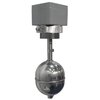
T203.F
Overfill protection for containers
Level sensors type T-20_.F... are
approved by the DIBt (German
Institute for Structural Engineering) as liquid level limit switches for the overcharge protection of containers for storing water-dangerous liquids.
Properties
- Protection class : IP 65 Dose
- Sliding tube length : max. 6000 mm
- Operating temperature : max. 135 °C
- Operating pressure : max. 20 bar
- F-Contact : 1/12 kΩ
- Switching current : 1A, 2A
- Switching voltage : 230 V AC
Float
- quantity : max. 6
- Type 05 : Oval Edelstahl 76 mm Ø | Dichte 0,81 g/cm³
- Type 06 : Oval Edelstahl 90 mm Ø | Dichte 0,67 g/cm³
- Minimum contact distance : Typ 05: 110 mm | Typ 06: 135 mm
Switching contacts and switching capacity
- Changeover contact : max. 5x | 60 W/VA
- normally open : max. 6x | 100 W/VA
- Normally closed contact : max. 4x | 60 W/VA
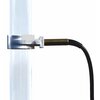
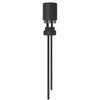
BI
Bistable Switch
Properties
- Protection class : IP 65
- Switching current : max. 1 A
- Switching voltage : max. 24 V
- Switching capacity : max. 20 W/VA
Material
- Housing : Messingrohr Ø 10 x 1
- Cable : TPK (PVC basis) | SIL (Silikon)
Operating temperature
- TPK : –15 ° ... + 60 °C
- SIL : –15 ° ... +130 °C
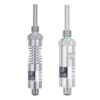
TSR-CAN-03
CANopen transmitter for temperature measurement in media
High-quality stainless steel transmitter for precise temperature measurement in all stainless steel-compatible media
Measurement parameters
- Measuring range : -40…+80 °C (optional +150°C)
- deviation : ± 0,3 K (-40…+80 °C)
- Measuring element : Halbleiter
- measuring resolution : 10 Bit
- measuring grid : ab 5 ms
ElectricalConnection
- CAN protocol : CANopen 2.0 A, nach ciA DS 404
- Physical Layer : nach DIN 11898
- Operating voltage : 12…27 V ±20 %
Operating conditions
- Operating temperature : -40...+80 °C
- Storage temperature : -40°C...+120°C
- Shock resistance : 30g, Dauer: 14 ms bei Raumtemperatur
- Vibration resistance : 10g bei 20 bis 1000 Hz
NP-255
Level Switch - multiple 2...4 - pneumatic
very reliable and simple
sensors for scanning liquids, in
particular when used for overflow
protection. liquids can be
aggressive, sticky or highly contaminated
Properties
- Protection class EN60529 : IP 54
- connection thread : ab G2”
- Union nut : ab G2¾”
- Container connection flange : ab DN 25
- Hose Ø : 16 mm
- Operating temperature : +60 °C
- medium temperatur : max. +60 °C
- Contact : Wechsler
- Switching capacity : 500 VA
- Switch-on point (Viton membrane) : 150 mm WS ±30 mm
- Switch-off point (MembraneViton) : 90 mm WS ±30 mm
Material
- Pitot tube / Hose : PVC
- Screw fitting/grommet : PVC
- flange : PVC
- Connection head : PVC
Switching voltage
- silver : max. 250 V AC
- Gold : max. 24 V AC
Switching current
- silver : max. 6 A
- Gold : max. 100 mA
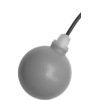
QFS-3X
Mercury-free float switch with µ-switch
Properties
- Protection class EN60529 : IP 68
- Cable entry : PVC , PTFE bzw. PVDF
- Conductor cross-section : 3 x 0,75 mm², PUR 3x 0,5mm²
- Operating pressure cylinder : max. 1 bar
- Operating pressure sphere : max. 2 bar
- Switching system : µ-Schalter
- Contact : Wechsler, NO, NC
Material Float
- QFS-30 : PPH (Polypropylen)
- QFS-31 : PPH (Polypropylen)
- QFS-34 : PE (Polyethylen)
Cable
- TPK : PVC Basis Ø 5,9 mm
- TPKV : PVC verstärkt Ø 7,3 mm
- PUR : Polyurethan Ø 5,4 mm
- SIL : Silikon Ø 6,4 mm
- FEP : Teflon Ø 4,0 mm
- AEM : Ethylen-Acrylat-Kautschuk
Cable length between float & attachment
- TPK : 70 mm
- TPKV : 90mm
- PUR : 100mm
- SIL : 80 mm
- FEP : 110 mm
- AEM : abhängig vom Innenkabel
Operating temperature
- TPK(V), AEM : max. + 60 °C
- PUR : max. + 70 °C
- Silicone,Tefloncable with PE float : max. + 80 °C
- Silicone, Teflon cable with PP float : max. + 85 °C
MaterialDensity
- QFS-31 : ≥≥ 0,6 g/cm³
- QFS-34 : ≥≥ 0,75 g/cm³
- QFS-30 TPK(V) cable : ≥≥ 0,85 g/vcm³
- QFS-30 PUR cable : ≥≥ 0,95 g/cm³
- QFS-30 SIL cable : ≥≥ 0,90 g/cm³
- QFS-30 FEP cable : ≥≥ 0,95 g/cm³
- QFS-30AEM cable : ≥≥ 0,90 g/cm³
Our application engineers advise you personally, comprehensively and professionally!
Simply contact us by phone or e-mail!